

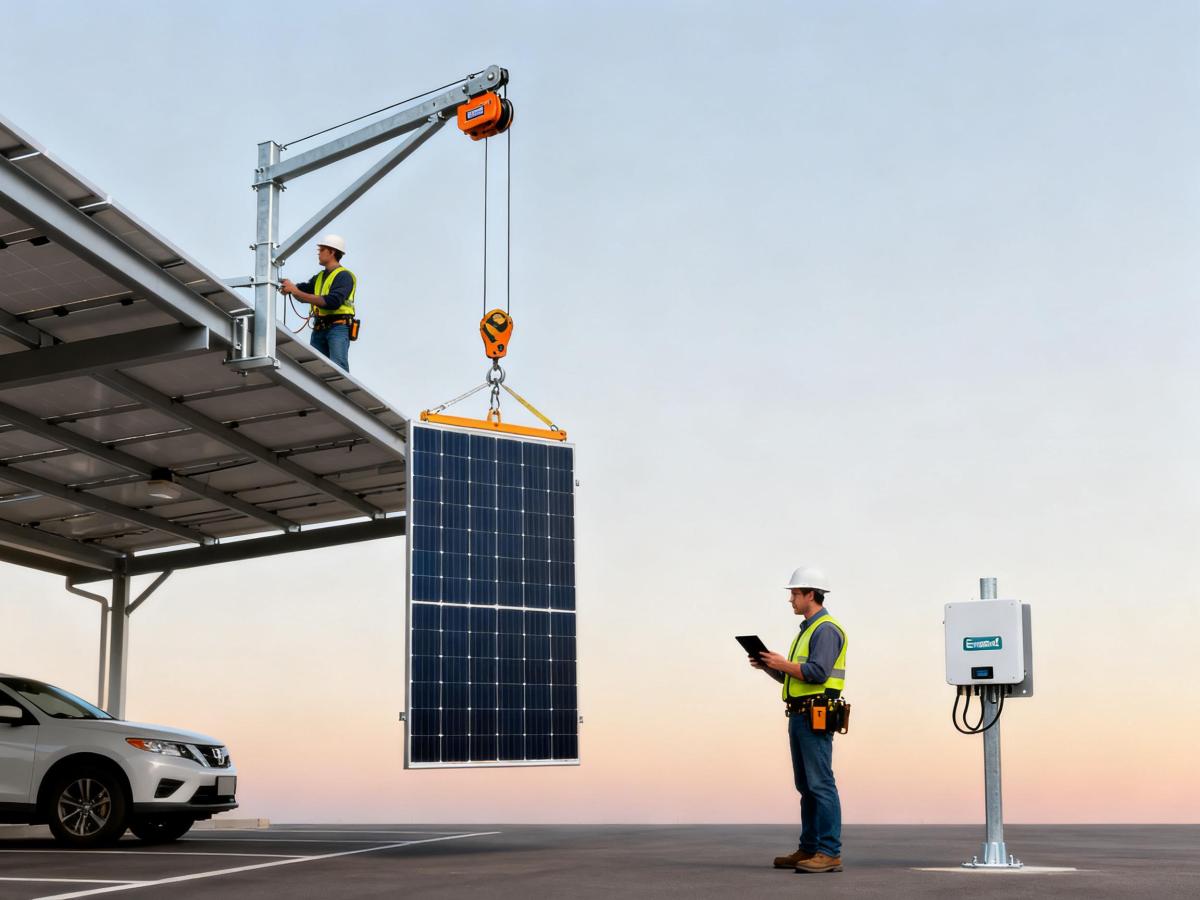
Choosing davits solar mounts for PV parking can streamline installation time and cut lifecycle costs for fleet projects while meeting strict safety standards. This practical overview compares system options - from commercial solar power arrays using 500w solar panel or 600 watt solar panel modules to retrofit questions like what are solar panels and whether cheap pv panels compromise durability - and considers balance-of-system components such as Enphase inverters, Enphase microinverters and Enphase solar panels. Targeted to technical evaluators, procurement and operations teams, it highlights cost drivers including the average cost of photovoltaic panels and long-term maintenance implications. The davits solar mounts approach reduces on-site labor hours because a standardized davit rigging and anchoring method allows teams to lift and position modules quickly, while preserving vehicle circulation in parking structures and minimizing traffic disruptions for fleet managers. Installation time becomes predictable, which helps procurement personnel lock down labor-related contingencies and helps financial approvers model depreciation and O&M budgets more accurately. For information researchers and end users asking what are solar panels, this paragraph underscores that a PV array is more than module wattage: it is a harmonized set of components—modules, inverters like Enphase microinverters, cabling and mounting solutions such as the davits solar mounts that tie safety, performance and lifecycle cost together. From a safety management perspective, davits reduce fall-exposure during module handling and comply readily with tether and anchorage protocols. From a project management angle, predictable readymade davit subsystems shorten critical path activities and increase the chance of meeting fleet-wide rollouts on time.
Definition & Technical Performance
Definition: what are solar panels? They are assemblies of photovoltaic cells packaged as modules to convert sunlight into DC electricity, rated by nominal wattage such as a 500w solar panel or a larger 600 watt solar panel. When specifying for parking canopies or fleet depots, decision makers should consider module efficiency, temperature coefficients, mechanical loading and warranty terms. Technical performance matters for lifecycle cost modelling: higher efficiency modules reduce required array area and may enable the use of fewer davits solar mounts per bay, lowering hardware and labor costs. Balance-of-system choices—like Enphase inverters vs. central inverters—affect installation time, maintenance complexity, and fault isolation. Enphase microinverters often simplify commissioning and monitoring per-module, while Enphase solar panels paired with Enphase inverters streamline vendor support and reduce spare-parts inventories. Key parameters to include in technical tender documents include module rated power (e.g. 475–490W for certain high-efficiency suppliers), thermal coefficients, expected degradation rates, and compliance with IEC 61215/61730 and local structural codes. A practical checklist for technical evaluators can include:
- Rated module wattage and tolerance (500w solar panel or 600 watt solar panel options listed)
- Mechanical load rating for wind and snow on canopy structures
- Compatibility with Enphase microinverters or system-level Enphase inverters
- Anchorage methods for davits solar mounts and roof/ground interfaces
- Warranty length and long-term performance guarantees
Cost, Procurement & Standards
Cost & Alternatives: procurement teams often ask about the average cost of photovoltaic panels and whether cheap pv panels are a viable short-term saving. Total installed cost is driven by module price, mounting hardware like davits solar mounts, inverters (Enphase inverters or microinverters), labor, permitting and long-term O&M. While cheap pv panels may reduce upfront spend, hidden costs include higher degradation, shorter warranties and more frequent field maintenance—factors that can erode projected ROI. A balanced approach compares lifecycle cost per kWh rather than headline module price. For budget modelling, include conservative degradation curves, spare-part provisioning for Enphase microinverters, and replacement scenarios for cheaper suppliers.Standards & Certification: ensure modules meet IEC and UL standards for electrical safety and mechanical load. Structural certification for davits solar mounts should reference local building codes and industry protocols for parking structures—fall protection, anchor testing and seismic performance if applicable. For quality control professionals and safety managers, ask suppliers for third-party test reports and factory inspection records.Procurement Guide & Call to Action: procurement officers and financiers benefit from a short tender checklist—technical spec, warranty, delivery schedule, installation method (davits vs. ballasted vs. framed canopy), and a clear maintenance SLA. Why choose us? Our consulting and supply coordination focuses on reducing installation time and controlling lifecycle costs through proven davits solar mounts deployment, integrated with leading balance-of-system partners. Contact us to review a fleet-specific proposal, request an evaluation of average cost of photovoltaic panels for your region, or schedule a site walk to determine whether a 500w solar panel or a 600 watt solar panel configuration is optimal for your fleet. Reach out now to align technical, commercial and safety requirements for a scalable, low-risk commercial solar power rollout.
Online message