

News
Related suggestion
- Negotiating the price of solar module in 2025: A Procurement Checklist to Secure Lower Unit Costs and Lead TimesPrice of solar module, price of solar panels and pv panel prices—compare Jinko solar panels, evaluate generac solar generator and grid tied solar system options, and check hybrid solar inverter compatibility. Download a procurement checklist to lower unit costs, cut lead times and secure warranty-backed delivery.
- How to purchase solar panels in 2025: Technical Specs, QA Tests and Contract Terms Every Buyer NeedsPurchase solar panels in 2025: generac solar generator, grid tied solar system, hybrid solar inverter and Jinko solar panels — compare pv panel prices, price of solar module and price of solar panels, learn how much are solar panels for homes and how many kilowatt hours in a watt. QA, specs & contract checklist.
- 600 watt solar panel selection guide for commercial roofs: space, mounting and ROI calculations (2025)What are solar panels? This 2025 selection guide compares 600 watt solar panel and 500w solar panel options for commercial solar power, examines davits solar mounts, enphase solar panels, enphase inverters and enphase microinverters, average cost of photovoltaic panels, cheap PV panels risks and ROI.
- Enphase microinverters vs string inverters: maintenance, failure modes and warranty impacts for asset managerswhat are solar panels — compare enphase microinverters vs string inverters for commercial solar power. Learn how 500w solar panel vs 600 watt solar panel choices, davits solar mounts, enphase inverters and enphase solar panels impact maintenance, failure modes, warranties and average cost of photovoltaic panels. Get procurement-ready checklists, warranty-impact templates and O&M strategies to avoid cheap pv panels pitfalls — click to access.
- Enphase solar panels adoption guide for distributors: margins, stocking strategy and technical specs (2025)what are solar panels: a 2025 distributor guide to Enphase solar panels, Enphase inverters and Enphase microinverters for commercial solar power. Compare 500w solar panel vs 600 watt solar panel, average cost of photovoltaic panels, cheap pv panels, davits solar mounts — optimize margins, stocking and specs. Click to access the SKU-level playbook and boost bid win rates.
If you're asking what are solar panels and how they fit commercial roofs, this 2025 selection guide compares 600 watt solar panel options with 500w solar panel alternatives, reviews average cost of photovoltaic panels and the trade-offs versus cheap PV panels. We walk through space planning, davits solar mounts and commercial solar power system design, plus ROI calculations tailored for enphase solar panels, enphase inverters and enphase microinverters. Ideal for technical evaluators, project managers, procurement and finance teams, the guide helps you quantify installation constraints, mounting choices and payback timelines before you buy. This opening paragraph integrates a clear definition and a concise market overview so that information researchers, procurement personnel and enterprise decision makers can align technical goals with business constraints. In practice, what are solar panels on a commercial roof? They are engineered PV assemblies — cells, glass, frame, backsheet and junction box — assembled to convert sunlight into direct current while meeting structural, fire and electrical codes. In 2025 the market shows higher adoption of larger format modules: 500w solar panel modules remain common for retrofit sites where roof geometry or stringing constraints limit power per module, while 600 watt solar panel formats are increasingly attractive where throughput, BOS reduction and lower labor per watt matter. Commercial solar power buyers must balance module efficiency, warranty terms, weight per square meter, and the implications for roof loads and fire classifications. Buyers often ask whether cheap PV panels are acceptable; they can reduce upfront spend but typically increase O&M risk, lower performance, and complicate warranty claims. For enterprises and project managers concerned with lifecycle cost, the conversation is about net present value and documented reliability, not just initial price. This paragraph sets the stage for the technical and procurement details that follow, and naturally positions the subsequent sections for users responsible for technical evaluation, financial approval and installation safety.
Technical performance and mounting options
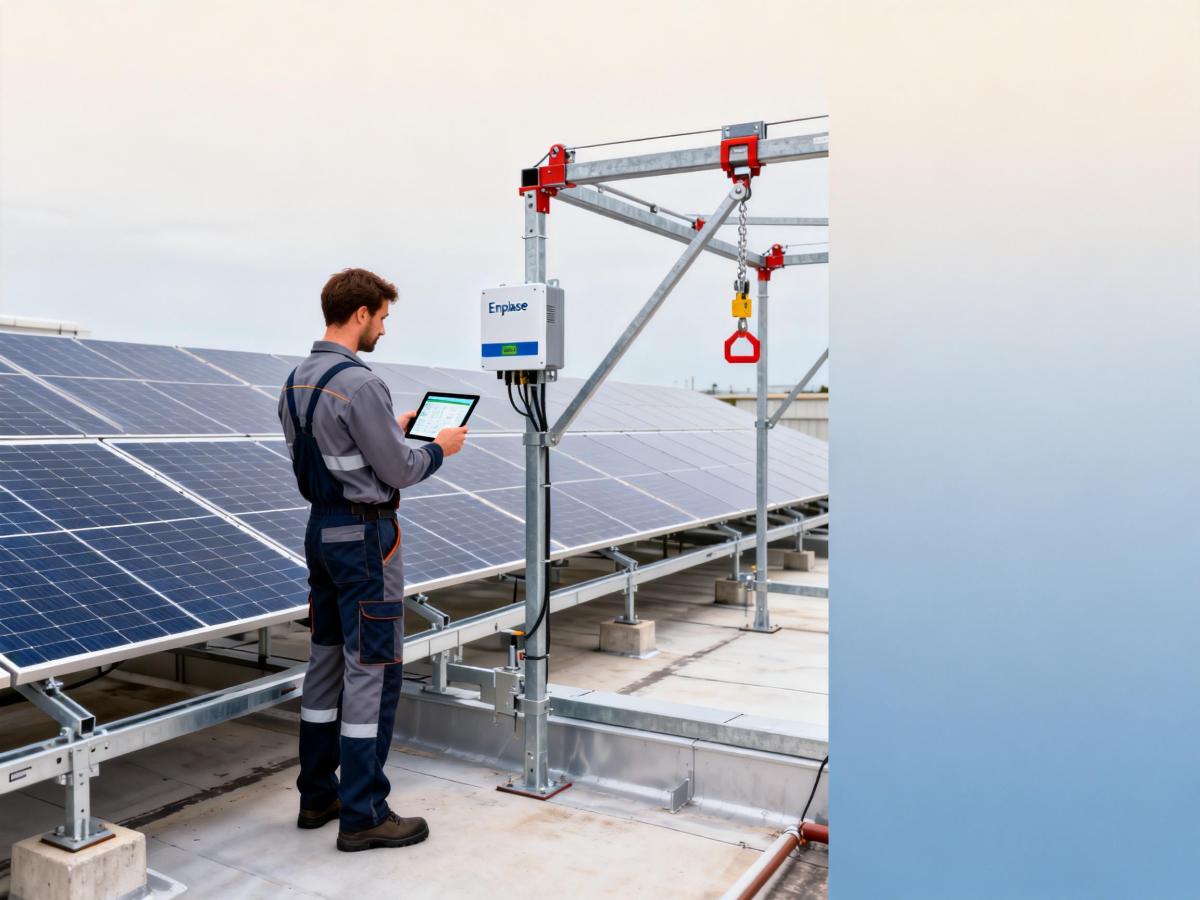
Sizing and technical selection are the backbone of a successful commercial rooftop deployment: module power, efficiency, temperature coefficient, and mechanical load ratings determine how many modules fit and how they perform across seasons. A 600 watt solar panel typically offers better watt-per-square-meter than a 500w solar panel, reducing required roof area and balance-of-system (BOS) components per kW, but you must check inverter stringing compatibility and DC/AC ratios. When considering enphase inverters and enphase microinverters, note that module-level power electronics change string design decisions — microinverters can simplify shading and monitoring but may increase per-module hardware cost; conversely, central inverters with higher-power strings can be more cost-effective for uniform, unshaded roofs. Davits solar mounts and other commercial-grade mounting systems must be evaluated for wind uplift, ballast needs, and attachment points; davits solar mounts specifically enable easier maintenance access and local code compliance on parapet edges or irregular roof zones. For structural teams and installers, review dead load (kg/m2) and uplift coefficients under ASCE or EN standards, and request manufacturer datasheets for the exact 600 watt solar panel model under consideration. Electrical teams should include checks for maximum system voltage, inverter input range, start-up currents and surge protections when integrating enphase microinverters or string inverters. Operations and maintenance personnel value standardized module sizes, accessible cable runs and clear labeling for future service. This section points technical evaluators and project managers to a checklist: verify module physical footprint, mounting torque specs, roof penetration strategy or ballasted scheme, compatibility with enphase solar panels or other vendor ecosystems, and confirm that the selected approach minimizes long-term O&M while matching performance forecasts and warranty commitments.
Procurement, cost, ROI calculations and why choose us
Procurement teams and financial approvers need transparent assumptions to compare scenarios: average cost of photovoltaic panels remains influenced by silicon prices, shipping and BOS items — expect a different cost profile for premium 600 watt solar panel modules versus lower-cost alternatives. A pragmatic ROI calculation begins with measured site production estimates (kWh/kW), local utility tariffs, available incentives, and estimated degradation (typically 0.4–0.7%/year for quality modules). For example, replacing cheap PV panels with higher-efficiency 600W modules can increase early-year yield and reduce labor hours per installed kW, improving payback even if module CAPEX is slightly higher. Procurement guides should include vendor due diligence, certificate verification (IEC 61215, IEC 61730, UL 1703/61730 where applicable), factory acceptance test records, and sample performance test results. If you require a reliable three-phase inverter option for larger farms, consider pairing modules with compatible central inverters such as Solis Three Phase Grid-Tied Inverters (100-125)K-5G for scalable projects; include that in bid documents only after technical fit checks. For ROI, estimate simple payback and discounted cash flow over 20–25 years, run sensitivity for electricity price inflation, and include O&M contingency for components like enphase inverters or microinverters. In the procurement checklist, compare lifecycle warranty terms, bankability and whether suppliers provide long-term performance guarantees — these factors matter to distributors, resellers and corporate buyers. Why choose us? We bridge technical assessment and commercial evaluation: our guidance helps project managers, safety officers and financial approvers reduce risk by aligning module selection, mounting strategy and inverter topology with documented ROI. Contact us to receive a tailored site assessment, a comparative LV BOM and a pro forma cashflow that matches your corporate procurement rules and quality expectations.
Online message