

News
Related suggestion
- 2025 Price Outlook: How the price of solar panels Impacts Project ROI and Procurement StrategiesGenerac solar generator, grid tied solar system and hybrid solar inverter buyers: decode 2025 pv panel prices, price of solar module and price of solar panels to decide whether to purchase solar panels or pick Jinko solar panels. Learn how many kilowatt hours in a watt, how much are solar panels for homes, and get ROI-ready procurement guidance to protect margins — access our checklist and price forecasts now.
- Integrating a generac solar generator with a grid tied solar system: Cost, Controls and Compliance Guide 2025Generac solar generator with grid tied solar system: guide on hybrid solar inverter controls, Jinko solar panels and pv panel prices. Compare price of solar module and price of solar panels, learn how much are solar panels for homes, how many kilowatt hours in a watt, how to purchase solar panels and get custom plan.
- Grid tied solar system ROI: What Procurement Teams Must Check in 2025 Before Signing ContractsGrid tied solar system ROI checklist: procurement teams must verify hybrid solar inverter compatibility, generac solar generator backup, Jinko solar panels specs, pv panel prices and price of solar module vs price of solar panels. Know how many kilowatt hours in a watt, how much are solar panels for homes and steps to purchase solar panels — click for procurement-ready cost, warranty and performance checks.
- pv panel prices 2025: Market Snapshot and Forecast to Fast-Track Project Financial Approvalspv panel prices 2025: market snapshot and forecast on price of solar panels and price of solar module to fast‑track approvals. Compare Jinko solar panels, hybrid solar inverter, Generac solar generator, grid tied solar system options, plus how much are solar panels for homes and how many kilowatt hours in a watt.
- What are solar panels in 2025? Practical guide for procurement, ROI and technical specsWhat are solar panels in 2025? Practical guide to 500w solar panel and 600 watt solar panel selection, average cost of photovoltaic panels, cheap PV panels vs commercial solar power, davits solar mounts and Enphase inverters/microinverters—procurement, ROI, specs.
This introduction frames the priorities for information researchers, procurement teams and technical evaluators: transparency on component and system pricing, realistic install solar panels cost estimates, lifecycle O&M, and storage trade-offs. Decision-makers need actionable unit costs, examples of warranty and degradation assumptions, and clear guidance on balance-of-system choices so financial approvers and project managers can approve budgets with confidence. The following sections translate market data, installation variables and procurement best practices into a concise, decision-oriented format.
Lifecycle cost breakdown: module price, BOS and long-term O&M
Understanding how much do photovoltaic panels cost in 2025 requires breaking total project expense into three buckets: module purchase price, balance-of-system (BOS) and installation, and lifecycle operations and maintenance. Module price remains a dominant line item: premium P-type and heterojunction modules show higher upfront solar panels price but lower degradation, improving LCOE over 20–30 years. For commercial solar roof panels and home solar panels, modules typically represent 30%–45% of upfront capex in 2025 projects, depending on wattage and efficiency. BOS includes inverters, mounting (racking, clamps, rails) and wiring; quality mounting systems such as IronRidge can raise install solar panels cost by 5%–10% versus commodity racking but reduce risk and warranty exposure, which is relevant for enterprise buyers and distributors.
Installation labor, permitting and interconnection fees vary by region; for rooftop projects, install solar panels cost per watt in many mature markets sits between $0.40–$1.00/W for labor and soft costs, while utility-scale projects see lower labor per watt but higher civil and BOS costs. Long-term O&M—cleaning, inverter replacement, performance monitoring and warranty claims—adds recurring expense that is often underestimated. When modeling lifecycle price, apply realistic degradation rates (0.3%–0.6%/yr for modern modules), inverter replacement at year 10–15, and contingency for soiling. These considerations change the effective solar panels price over lifetime, and should guide procurement specifications and QA checks for suppliers and distributors.
Payback scenarios and using a solar calculator for accurate modeling
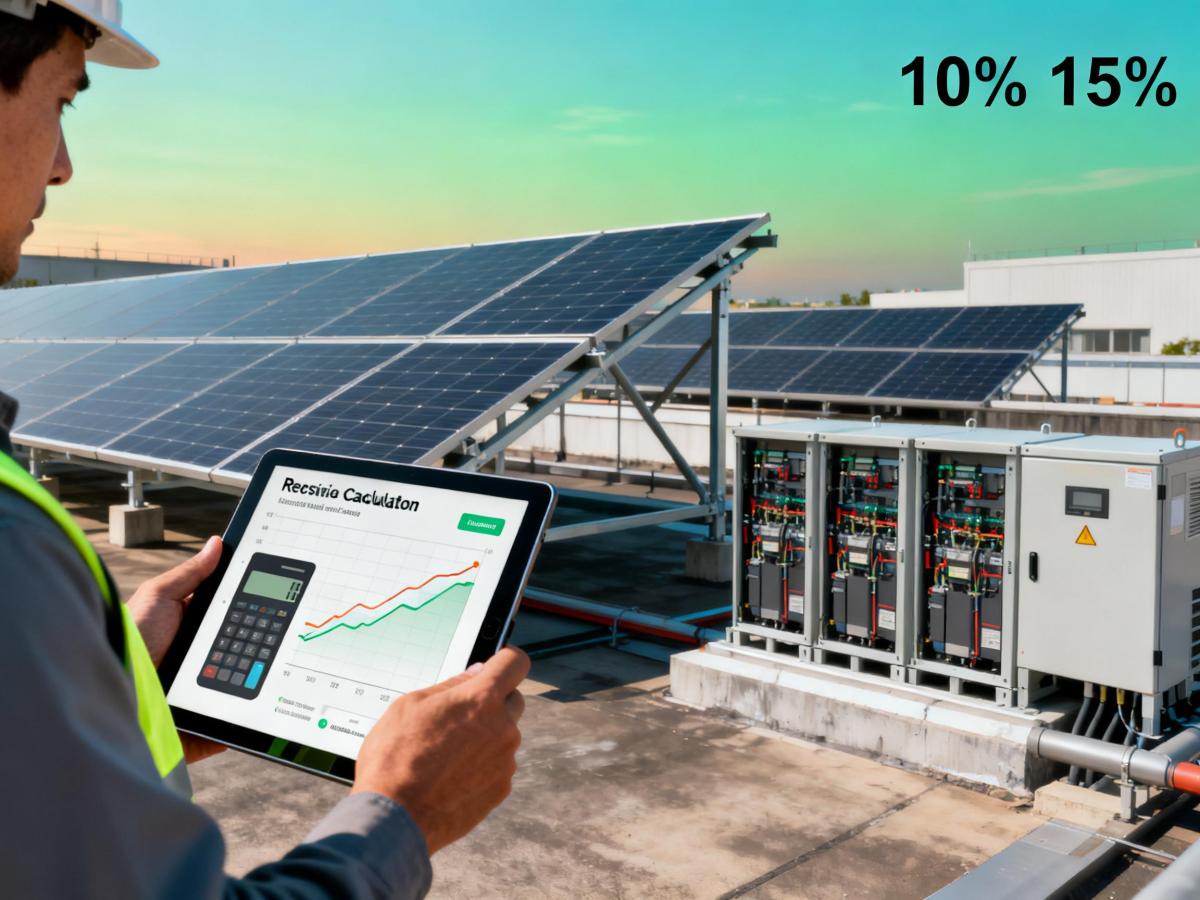
Project teams and financial approvers should rely on scenario-based modeling rather than a single point estimate to answer how much do photovoltaic panels cost for a given installation. A solar calculator is essential: it lets you input local insolation, tariff structures, feed-in rates, system losses, and financing terms to generate IRR, NPV and payback timelines. For example, a 100 kW commercial rooftop with moderate irradiance and net-metering may achieve payback in 4–7 years under current incentives; a residential system sized to self-consume may see payback in 6–10 years depending on utility rates and available tax credits.
When modeling, include install solar panels cost, O&M inflows/outflows and potential revenue from renewable energy credits. Use sensitivity analyses for panel price volatility, degradation rates and battery adoption. Storage options such as an Enphase battery or EG4 battery change economics by shifting loads and enabling time-of-use arbitrage; include round-trip efficiency and replacement cycles in the calculator to capture true lifecycle value. For equipment benchmarking, consider modules like Canadian Solar TOPBiHiKu6 590w 595w 600w 605w 610w 615w 620w which present high-wattage options that can reduce BOS and labor per watt, improving payback in constrained roof areas.
Financial teams should also model different procurement pathways—outright purchase, PPA, lease, or CAPEX with vendor financing—since each alters the effective cost of energy and apparent payback. A robust solar calculator enables procurement personnel to compare scenarios quickly and present defensible economic cases to CFOs and project committees.
Procurement tips: mounting, inverter and storage choices (IronRidge, Enphase battery, EG4 battery) and supplier selection
Procurement and project management roles must balance upfront solar panels price against risk management, warranty coverage and lifecycle serviceability. Prioritize suppliers with verifiable supply chain traceability, bankable performance data and transparent warranty terms. For mounting, IronRidge and similar engineered racking systems command a premium but reduce installation time and failure risk; specify wind and snow load ratings aligned with local codes to avoid retrofits. Inverter choice affects system monitoring, safety and maintenance; microinverters or module-level power electronics pair well with constrained roofs and improve production through partial shade management.
Storage selection—whether Enphase battery, EG4 battery or other chemistries—should be driven by application: resilience, peak shaving, or arbitrage. Consider total cost of ownership: battery cycle life, warranty throughput (kWh guaranteed), depth of discharge limits and integration with existing EMS. For distributors and dealers, negotiate volume pricing, joint warranties and defined lead times. Include acceptance tests at delivery, clear spare parts agreements, and KPI-based performance bonds for EPC contractors. Quality assurance protocols and after-sales maintenance contracts materially lower lifecycle risk and unexpected costs, improving the realized value of home solar panels and commercial solar roof panels alike.
Summary and next steps
In summary, answering how much do photovoltaic panels cost in 2025 requires a lifecycle view: module and BOS pricing, install solar panels cost, O&M and the impact of storage. Use a solar calculator to test scenarios, and prioritize procurement decisions that balance upfront solar panels price with long-term performance, warranty and serviceability. For buyers and project teams, specify quality mounting like IronRidge where structural risk exists, and evaluate storage options such as Enphase battery and EG4 battery in your financial model.
To reduce procurement risk and accelerate decision-making, contact our team for a detailed cost model, sample specifications and supplier evaluations. Learn more about tailored solutions and request a proposal—immediately contact us to optimize your next photovoltaic project and secure predictable lifecycle costs.
Online message