

News
Related suggestion
- 2025 Price Outlook: How the price of solar panels Impacts Project ROI and Procurement StrategiesGenerac solar generator, grid tied solar system and hybrid solar inverter buyers: decode 2025 pv panel prices, price of solar module and price of solar panels to decide whether to purchase solar panels or pick Jinko solar panels. Learn how many kilowatt hours in a watt, how much are solar panels for homes, and get ROI-ready procurement guidance to protect margins — access our checklist and price forecasts now.
- Integrating a generac solar generator with a grid tied solar system: Cost, Controls and Compliance Guide 2025Generac solar generator with grid tied solar system: guide on hybrid solar inverter controls, Jinko solar panels and pv panel prices. Compare price of solar module and price of solar panels, learn how much are solar panels for homes, how many kilowatt hours in a watt, how to purchase solar panels and get custom plan.
- Grid tied solar system ROI: What Procurement Teams Must Check in 2025 Before Signing ContractsGrid tied solar system ROI checklist: procurement teams must verify hybrid solar inverter compatibility, generac solar generator backup, Jinko solar panels specs, pv panel prices and price of solar module vs price of solar panels. Know how many kilowatt hours in a watt, how much are solar panels for homes and steps to purchase solar panels — click for procurement-ready cost, warranty and performance checks.
- pv panel prices 2025: Market Snapshot and Forecast to Fast-Track Project Financial Approvalspv panel prices 2025: market snapshot and forecast on price of solar panels and price of solar module to fast‑track approvals. Compare Jinko solar panels, hybrid solar inverter, Generac solar generator, grid tied solar system options, plus how much are solar panels for homes and how many kilowatt hours in a watt.
- What are solar panels in 2025? Practical guide for procurement, ROI and technical specsWhat are solar panels in 2025? Practical guide to 500w solar panel and 600 watt solar panel selection, average cost of photovoltaic panels, cheap PV panels vs commercial solar power, davits solar mounts and Enphase inverters/microinverters—procurement, ROI, specs.
Finance teams modeling 25-year returns often treat a single solar panel’s degradation as a minor variable, but even slight loss alters projected cash flows, solar panels cost, and payback timelines. This article explains how panel wear—whether on a solar roof panels array or home solar panels—affects assumptions about solar energy yield, install solar panels cost, solar panels price, and long-term maintenance budgets. From what are solar panels to choosing the best solar panels, procurement and technical leads will learn which inputs matter most for accurate financial forecasts and funding approvals in 2025. In practice, a single underperforming solar panel in a string can reduce system output disproportionately because of mismatch losses and inverter clipping, driving a need to revisit assumptions such as annual degradation rate, warranty expectations, and replacement contingencies. For information researchers, technical evaluators, procurement and finance approvers, the distinction between nominal degradation (e.g., 0.3%/year) and anomalous early degradation (e.g., >1%/year) is material: it changes net present value (NPV) calculations, internal rate of return (IRR) targets, and debt service coverage ratio (DSCR) assessments over a 25-year bankable model. When teams price projects they must fold in realistic solar panels cost trajectories, expected spare part budgets, and insurance-loading for production shortfalls. This introduction sets the frame: small physical declines translate to measurable economic exposure, and the remainder of this article drills into definitions, market signals, technical parameters, procurement guidance, cost alternatives, a compact case study, and practical FAQs to help stakeholders from installers to enterprise CFOs make defensible decisions in 2025.
Definition & Overview: What a Degraded Module Really Means
Start by answering the obvious: what are solar panels, and how do we quantify degradation? At the cell level, degradation is the loss of conversion efficiency caused by factors such as light-induced degradation (LID), potential-induced degradation (PID), microcracks, delamination, and soiling. For system-level financial models, degradation is represented as an annual percentage decline in AC energy output. Typical bankable assumptions range from 0.25% to 0.8% per year depending on technology and manufacturer guarantees, but observed field data show variability. That variability affects solar panels price forecasts and the install solar panels cost line-items tied to maintenance and early replacements. For those assessing best solar panels for a project, module bifaciality, temperature coefficient, and low-light performance influence both first-year yield and the slope of the degradation curve. Consider mismatch effects: a single panel producing 95% of rated power in a series string can reduce the string's delivered energy by more than 5% due to current-limited operation; if degradation is spatially clustered, AC losses escalate through inverter and DC string interactions. Decision-makers should prefer data: combine manufacturer test certificates (IEC 61215, IEC 61730), extended warranties, and independent field degradation studies to move from a generic 0.5% assumption to module-specific forecasts. That forward-looking clarity informs both solar panels cost modeling and the selection of the best solar panels when aiming to minimize lifecycle cost per kWh. This section helps technical evaluators and procurement teams align on definitions that feed finance models.
Market Overview & Trends: Pricing, Warranty Landscapes, and Risk Premiums
In 2025 the market for solar roof panels and utility modules continues to mature: supply-chain normalization after earlier disruptions has pushed average solar panels price downward, but increased emphasis on quality, longer warranties, and bifacial technology has introduced segmentation in solar panels cost. For procurement personnel and commercial evaluators, two trends matter. First, buyers increasingly pay a premium for modules with documented lower degradation rates, extended performance guarantees, and positive field performance records; second, developers and financiers are explicit about P50/P90 yield curves rather than single-point estimates. These dynamics mean that install solar panels cost is not just capex: it includes higher upfront module price for lower degradation, which may lower O&M and replacement risk, altering 25-year NPV favorably. From a market-analysis perspective, the decision to choose lower upfront cost modules versus higher-quality modules is an exercise in risk transfer. If a portfolio contains many rooftop home solar panels with heterogeneous installation and maintenance regimes, the blended degradation risk increases, so risk-adjusted solar panels cost and insurance premiums rise. Conversely, large utility-scale projects benefit from standardized procurement and economies of scale, allowing procurement teams to negotiate longer warranties and better performance guarantees. International standards continue to guide buyers: IEC qualifications, UL listings, and manufacturer performance statements are table stakes. For finance teams, translating these market trends into discount-rate adjustments and contingency buckets is critical: higher technological confidence reduces the yield volatility input and can materially improve project bankability. This market snapshot equips enterprise decision-makers and distributors with the context they need to model degradation risk correctly.
Technical Performance: Modeling Degradation, Measurement, and Mitigation
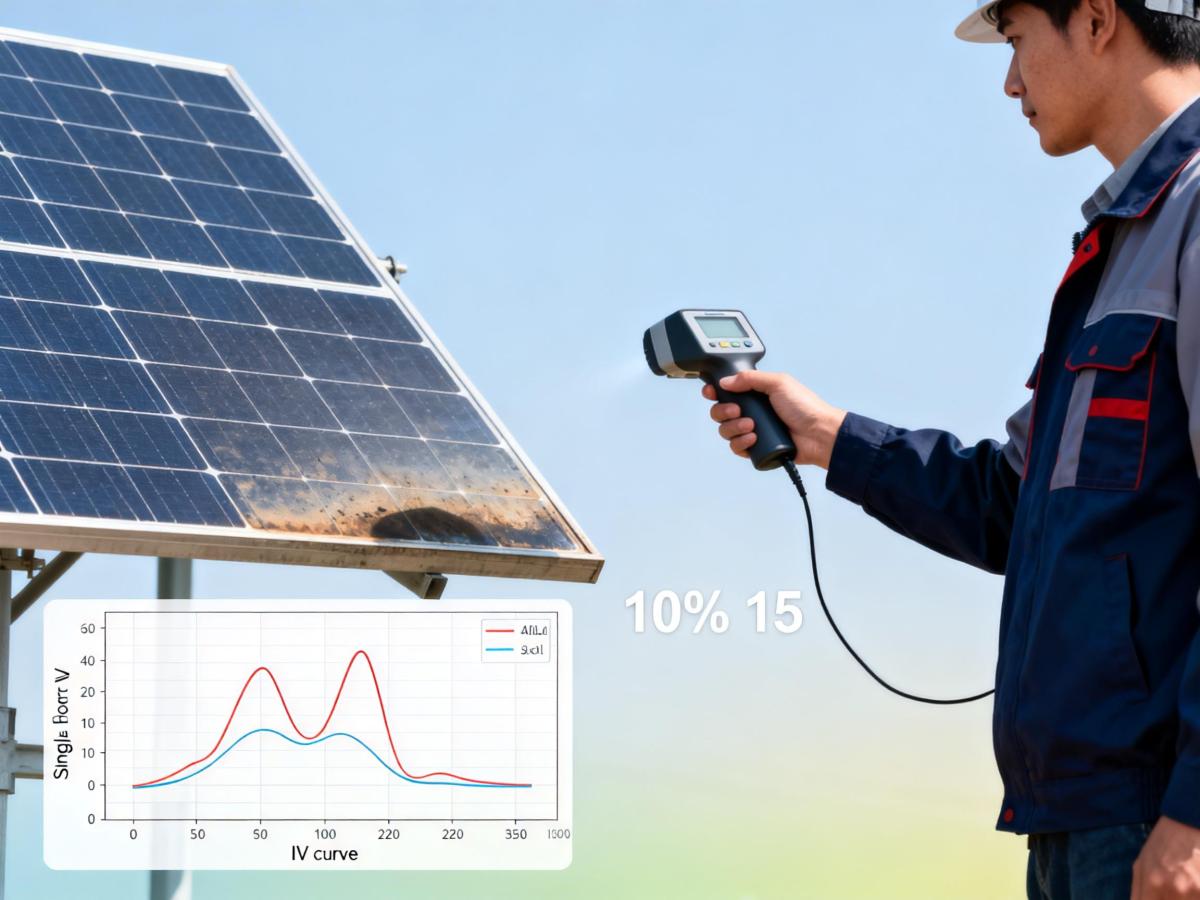
Technically rigorous models separate inherent module degradation from external drivers. Inherent drivers include encapsulant browning, LID, and gradual cell degradation; external drivers include soiling, snow, shading changes, and installation defects. Measurement strategies involve baseline IV curve mapping, periodic performance ratio (PR) tracking, and use of string-level monitors to identify underperforming panels early. For operations personnel and maintenance teams the question is practical: when does a single solar panel failure or underperformance justify replacement versus acceptance and derating? The answer depends on the marginal cost of replacement, the impact on system output, and the remaining contract term. Replacement economics feed directly into the install solar panels cost line items: spare modules, labor, crane/intervention costs, and potential downtime. To illustrate procurement and technical alignment, many buyers now specify modules like Bifacial Risen Module 535W 545W 555W Solar Panels because bifacial designs and higher wattages can amortize fixed BOS and installation costs, improving LCOE even if upfront solar panels price is slightly higher. However, bundling higher-performance modules requires precise modeling of albedo benefits, bifacial gain assumptions, and degradation differentials. Useful mitigation tactics include: (1) series-string reconfiguration or use of optimizers to reduce single-panel impact; (2) targeted warranty clauses and performance guarantees; (3) predictable monitoring cadence and a spare-pool policy to manage spare-part inventory and install solar panels cost. Technical evaluators should feed measured degradation curves into 25-year cashflow models rather than static assumptions—this improves accuracy for finance approvers and reduces contingency over-estimates that otherwise inflate project budgets.
Procurement, Cost Alternatives, Case Study, and Actionable FAQs
Procurement teams must balance purchase price with lifecycle cost. A simplified decision framework: quantify P50/P90 yield sensitivity to module degradation; price in install solar panels cost for replacement over 25 years; factor in warranty recovery probabilities; and stress-test the model under accelerated degradation scenarios. Consider alternatives: higher-efficiency mono-PERC or heterojunction modules with stronger warranties can reduce expected system downtime and O&M spend, while lower-cost commodity panels may increase replacement rates and warranty disputes. Below is a compact case approach and FAQ for stakeholders.
- Case snapshot: A 500 kW rooftop portfolio experienced a single batch of modules with 1.2% early degradation vs contract’s 0.5% expectation. Early detection via string-level PR reduced revenue loss by enabling targeted replacements. The adjusted 25-year NPV improved after warranty recoveries and renegotiated spare-part pricing, demonstrating why conservative degradation assumptions and active monitoring are prudent.
- FAQ (short answers):
- Q: How much does a single panel affect payback? A: It depends on system topology but can reduce early-year yield and extend payback by months to years if not mitigated.
- Q: Should we buy the cheapest panels? A: Not without modeling lifecycle costs; cheapest upfront solar panels cost can mean higher total cost per kWh due to increased degradation-related losses.
- Q: How to budget for unknown degradation? A: Use sensitivity bands (low/med/high degradation), allocate a replacement reserve, and require field performance data from suppliers.
For decision-makers, the practical next steps are clear: embed module-specific degradation curves into financial models, require third-party degradation validation where possible, and procure modules that demonstrate favorable long-term yield even if their initial solar panels price is higher. Why choose us? Even without a disclosed vendor profile, our analytical approach and standardized modeling templates help translate technical degradation into defensible financial inputs—reducing uncertainty for finance approvers, procurement teams, and project managers. Contact us to get a tailored degradation-sensitivity review for your portfolio, including recommended procurement terms, monitoring checklists, and contingency sizing for install solar panels cost and maintenance budgets.
Online message