

News
Related suggestion
- 2025 Price Outlook: How the price of solar panels Impacts Project ROI and Procurement StrategiesGenerac solar generator, grid tied solar system and hybrid solar inverter buyers: decode 2025 pv panel prices, price of solar module and price of solar panels to decide whether to purchase solar panels or pick Jinko solar panels. Learn how many kilowatt hours in a watt, how much are solar panels for homes, and get ROI-ready procurement guidance to protect margins — access our checklist and price forecasts now.
- Integrating a generac solar generator with a grid tied solar system: Cost, Controls and Compliance Guide 2025Generac solar generator with grid tied solar system: guide on hybrid solar inverter controls, Jinko solar panels and pv panel prices. Compare price of solar module and price of solar panels, learn how much are solar panels for homes, how many kilowatt hours in a watt, how to purchase solar panels and get custom plan.
- Grid tied solar system ROI: What Procurement Teams Must Check in 2025 Before Signing ContractsGrid tied solar system ROI checklist: procurement teams must verify hybrid solar inverter compatibility, generac solar generator backup, Jinko solar panels specs, pv panel prices and price of solar module vs price of solar panels. Know how many kilowatt hours in a watt, how much are solar panels for homes and steps to purchase solar panels — click for procurement-ready cost, warranty and performance checks.
- pv panel prices 2025: Market Snapshot and Forecast to Fast-Track Project Financial Approvalspv panel prices 2025: market snapshot and forecast on price of solar panels and price of solar module to fast‑track approvals. Compare Jinko solar panels, hybrid solar inverter, Generac solar generator, grid tied solar system options, plus how much are solar panels for homes and how many kilowatt hours in a watt.
- What are solar panels in 2025? Practical guide for procurement, ROI and technical specsWhat are solar panels in 2025? Practical guide to 500w solar panel and 600 watt solar panel selection, average cost of photovoltaic panels, cheap PV panels vs commercial solar power, davits solar mounts and Enphase inverters/microinverters—procurement, ROI, specs.
Understanding 2025 solar panels price benchmarks is essential for project margins. This guide breaks down how manufacturers’ pricing affects solar panels cost across categories—residential home solar panels, commercial solar roof panels and utility-scale solar panel systems—so procurement, finance and project teams can evaluate bids. We cover what are solar panels, solar panels install and comparative install solar panels cost, tips for choosing the best solar panels, and key metrics that influence solar energy returns. Whether you’re a technical evaluator, installer, distributor or end consumer, this concise analysis helps you translate solar panels price signals into actionable margin decisions. In practice, that means reading beyond headline solar panels price tags to the component-level drivers — wafer supply, cell efficiency class (N-type vs P-type), module form factor, glass or double-glass construction, and warranty/ degradation profiles — because each factor shifts the all-in installed cost per watt and the lifecycle return on investment. Project managers and procurement personnel frequently ask: what are the trade-offs between lower upfront solar panels cost and higher operational complexity or lower yield? Which manufacturers’ pricing behaviors tend to compress or expand project margins in the developer’s favor? This first section frames those questions and sets the stage for deeper, category-specific benchmarks that follow. We will reference common procurement metrics such as $/W module price, LCOE (levelized cost of energy), BOS (balance of system) fractions, and soft-cost drivers like permitting and interconnection risks. For both small residential systems and large utility-scale solar installations, the interplay between manufacturer discounts, shipping and logistics, and install labor rates determines whether a bid is profitable or margin-compressive. This introduction is aimed at helping stakeholders — from financial approvers who need an LCOE-ready summary to quality-control personnel examining warranty coverage — prioritize the pricing signals that matter. Read on to get concrete comparison frames, a procurement checklist, technical performance levers and practical guidance for turning solar panels price benchmarks for 2025 into defensible margin decisions.
Definition & Overview: What Are Solar Panels and How Price Benchmarks Work
A clear definition helps align expectations: what are solar panels in procurement language? Solar panels, or photovoltaic (PV) modules, convert sunlight into electricity via semiconductor cells; they are specified by peak power (W), efficiency (%), form factor (mono/ poly/ bifacial/ double glass), and degradation warranty. For buyers assessing solar panels cost, the primary module price benchmark is $/W for the module itself, often quoted for different wattage tiers (e.g., 565W–580W for high-efficiency bifacial formats). But module cost is only one piece. The total install solar panels cost includes racking, inverters, wiring, labor, permitting, shipping, and performance guarantees — together forming the all-in $/W installed. When evaluating bids, teams must examine both the headline solar panels price and the soft-cost assumptions embedded in proposals. Pricing benchmarks for 2025 reflect continued evolution: higher adoption of N-type cell architectures, bifacial double-glass modules for improved energy yield, and incremental efficiency gains that change system sizing. These shifts influence the metrics procurement and technical evaluators care about: simple payback, IRR, and LCOE. For example, if a slightly higher module price yields 3–6% more annual energy via bifacial gains and lower degradation over 25 years, the lifecycle value may favor the higher upfront cost. For distributors and dealers, understanding price elasticity by segment (residential home solar panels vs commercial solar roof panels vs utility-scale systems) is essential to set margins and negotiate volume discounts. From the standpoint of installers and maintenance teams, module selection impacts handling, roof integration complexity and O&M expectations; higher-efficiency modules may reduce roof area and labor hours per kW but increase unit weight or require different mounting. This overview prepares stakeholders to interpret manufacturer quotes, align on acceptable install solar panels cost ranges, and prioritize metrics that preserve project margins across the procurement lifecycle.
Market Overview & Trend Insights for 2025
Market dynamics in 2025 are shaped by supply-side consolidation, material cost trends and demand segmentation between residential, commercial and utility projects. Solar energy still benefits from strong policy drivers and sustained demand, but raw material cycles — polysilicon, silver paste, glass — and logistics bottlenecks periodically create price volatility for manufacturers, which cascades into solar panels price updates. For procurement teams, the key signals are: manufacturer capacity announcements, N-type cell adoption rates, and the pace at which bifacial and double-glass modules are adopted in commercial and utility projects. In many markets, utility-scale procurement favors lowest $/W module price at very large volumes, while commercial and residential buyers now weigh lifecycle yield more heavily due to rooftop constraints and premium warranty expectations. Another trend: increased transparency in manufacturer degradation testing and PID/LeTID mitigation; modules that carry robust field-validated warranties may command a premium but reduce long-term performance risk. Financing teams and analysts should monitor these trends because they alter projected cashflows and the install solar panels cost profile through warranty-driven reserve requirements or insurance premiums. For distributors and dealers, channel margins compress when module manufacturers apply tiered pricing for repeat volume, making supplier relationships and forecast accuracy decisive. Meanwhile, installers see shifts in the best solar panels for urban rooftops — slimline high-efficiency panels that reduce shading losses — and in commercial projects where solar roof panels integrated with green roofing or cool-roof coatings change balance-of-system choices. Ultimately, reading the 2025 market means combining commodity-watch vigilance with a deep understanding of how module-level technical advances translate into tangible energy yield and margin impacts across project sizes.
Procurement Guide & Comparison Analysis (Practical Steps for Buyers)
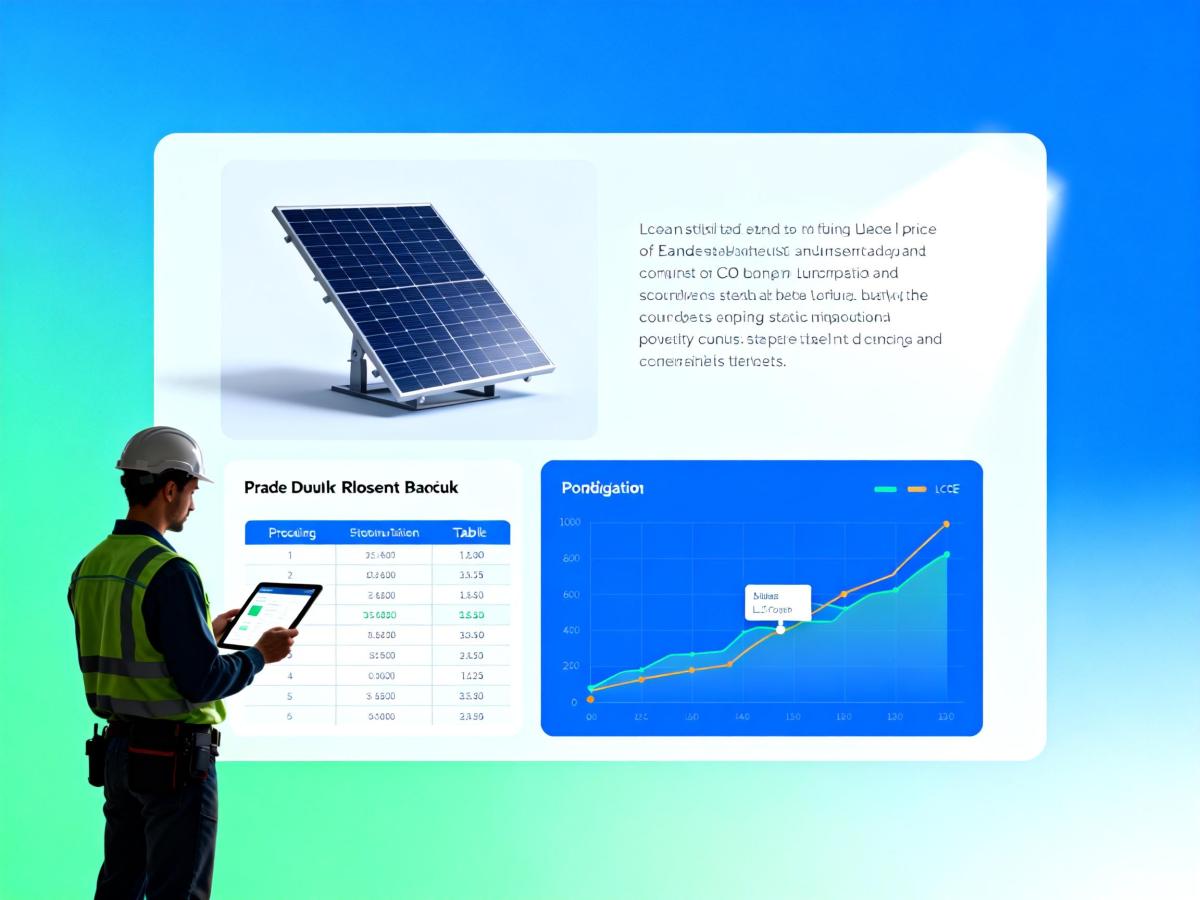
When you evaluate bids, a structured procurement checklist turns price quotes into comparable economic outcomes. Start with these steps: 1) normalize module quotes to $/W at standard test conditions; 2) apply expected bifacial gain or shading loss adjustments to derive realistic annual energy; 3) include warranty-adjusted degradation in cashflow models; 4) quantify soft costs and logistics into the all-in install solar panels cost; and 5) assess supplier credit, delivery lead-time and spare-parts support. Use a simple comparison table (internal spreadsheet) that lists module price, efficiency, warranty years, expected annual degradation, bifacial yield factor, and logistics cost — then compute LCOE and payback. Procurement teams should also consider alternative sourcing scenarios (spot buy vs contracted volumes, local stock vs direct factory ship) because these change landed solar panels price and risk allocation. For spec-driven projects, technical evaluators often request sample modules and IV curve testing to verify manufacturer claims prior to award. If you are comparing residential options, prioritize module form factor and appearance along with warranty terms; for commercial rooftop projects, consider roof integration costs and potential roof reinforcement needs; for utility-scale, focus on $/W, bankability and supply certainty. A specific product example, used here for illustration, demonstrates how module selection appears in a bid: when a bid lists a high-efficiency bifacial option such as Ja Solar Deepblue 4.0 N-Type Solar Panel 580W 575W 570W 565W Bifacial Solar Panel Double Glass Moduel, procurement must convert the higher module price into expected incremental annual yield and assess how that yield affects LCOE and warranty exposure. Use scenario analysis: if bifacial improves annual yield by X% and reduces degradation by Y% relative to a baseline module, calculate NPV of incremental cost vs energy gains. That difference often determines whether choosing the higher-priced but higher-performance module improves project margins. Finally, maintain a negotiation playbook — including possible trade-offs like extended payment terms, staggered deliveries, or spare-module provisions — to extract the best net solar panels cost while protecting schedule and quality.
Technical Performance, Cost Alternatives & Call to Action
Technical performance metrics matter to both operations and finance: module efficiency, temperature coefficient, low-light response, bifaciality ratio, mechanical load rating, and PID resistance feed directly into yield models and O&M expectations. Project managers and maintenance teams should require datasheet validations and third-party test reports for critical specs so that the promised energy production translates to site-level outcomes. For cost & alternatives, compare high-efficiency N-type modules against lower-cost P-type alternatives across lifecycle models: N-type often demands a premium but reduces mismatch loss, improves high-temperature performance and offers lower long-term degradation; P-type may lower upfront investment and sometimes suits constrained budgets. Consider aftermarket options like microinverters for residential installs, DC optimizers for partial-shade commercial roofs, or tracker systems for utility arrays — these influence installed system cost and may alter which module type yields the best margin. Below are practical FAQ-style clarifications for typical stakeholders: - How do you reconcile manufacturer module price with install solar panels cost? Normalize to $/W installed by including all BOS and soft-costs in the comparison. - What are common pitfalls when choosing the best solar panels? Ignoring realistic yield assumptions, skipping warranty fine print, and underestimating freight/insurance costs. - How should finance teams view premium modules? Evaluate on LCOE and risk reduction merits, not just headline module price. Why choose us? Our multidisciplinary approach aligns procurement rigor with technical validation and commercial negotiation tactics, helping you convert manufacturer pricing into margin-preserving decisions. Contact us to receive a tailored procurement checklist, a template comparison spreadsheet, and scenario-based LCOE models that reflect your project scale and risk profile. Contact us via the project inquiry channel to schedule a technical-commercial review and start reducing uncertainty in your next solar procurement.
Online message